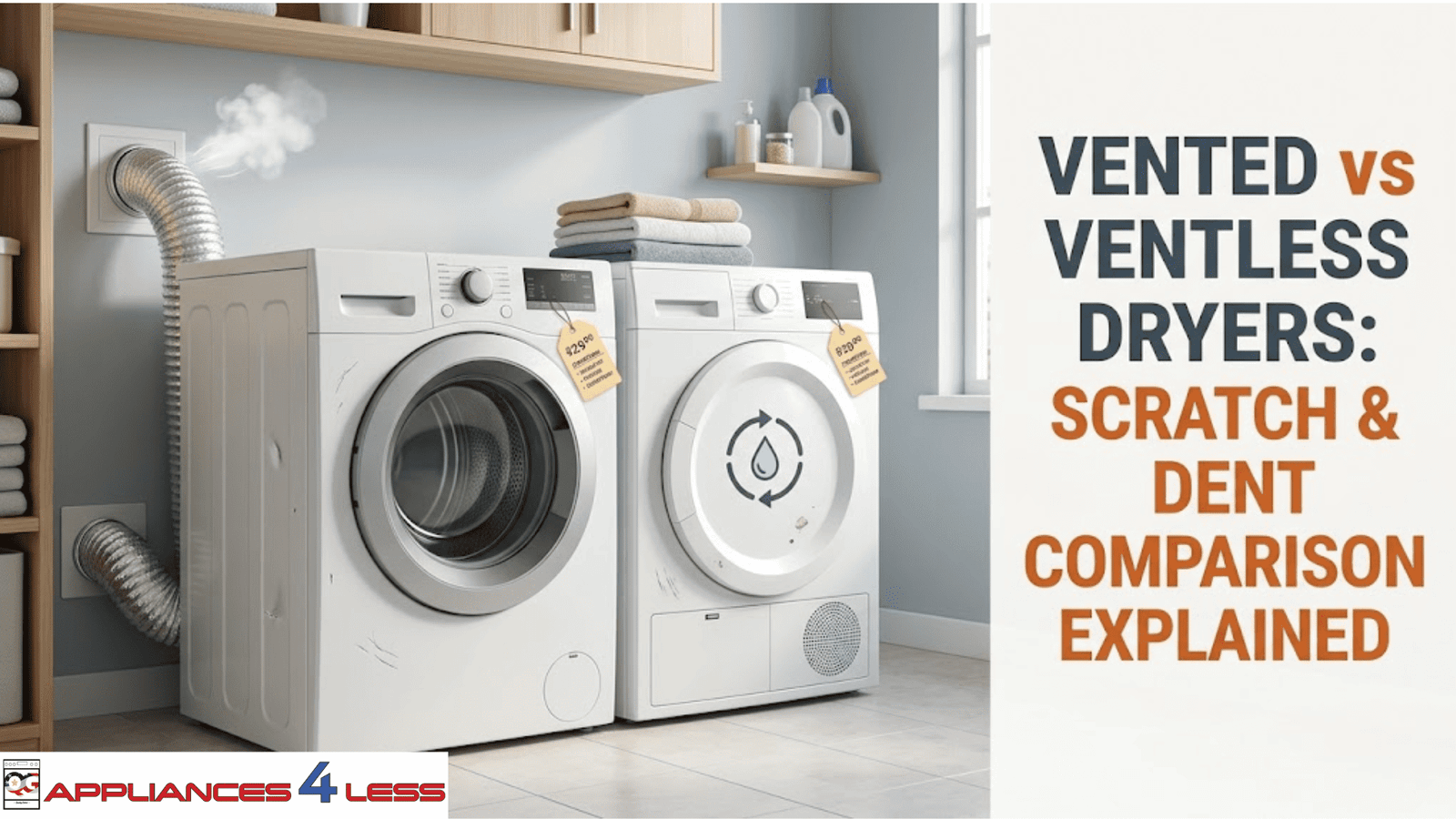
Vented vs ventless dryers refers to two ways a dryer gets rid of wet air. A vented dryer pushes warm, wet air outside through a hose. A ventless dryer keeps that air inside the machine. It cools the air down and turns it back into water. Either way, you end up with dry clothes.
Located on South Noland Road in Independence, Appliances 4 Less KCMO sells both vented and ventless dryers. We carry LG, Samsung, and Whirlpool models. Prices go as low as 55 percent off retail. Most dryers come with a four-year warranty. Our team can help match a dryer to your home setup. Staff can walk you through both types.
What Makes Vented Dryers Different
A vented dryer needs a hose that runs to the outside of the house. This hose carries warm, wet air away from the machine. Shoppers comparing Gas vs Electric Dryers should know that both types can be vented models. Most homes already have a vent hookup ready for this kind of dryer. This makes setup fast in most homes.
Advantages of Vented Dryers
- Dries clothes faster than most ventless models.
- Costs less to buy up front.
- Works well in a home with existing vents.
Disadvantages of Vented Dryers
- Needs a hole in the wall for the vent.
- Cannot be placed just anywhere in a home.
How Vented Dryers Move Air Outside
Inside a vented dryer, a heating element warms the air first. A drum spins the clothes through that warm air. A fan then pushes the warm, wet air straight out through the vent hose. This keeps moisture from building up inside the machine. It also keeps the room from feeling humid after each load.
What Makes Ventless Dryers Different
A ventless dryer does not need a hose to the outside. This means it can go almost anywhere in a home. Small apartments and condos often use this type because running a vent isn’t always possible. Some models use a condenser. Others use a heat pump to remove moisture instead. This gives more setup choices overall.
Advantages of Ventless Dryers
- Fits in a home with no outside vent.
- Can go almost anywhere in a room.
- Uses less energy than most vented models.
Disadvantages of Ventless Dryers
- Takes longer to fully dry a load.
- Usually costs more than a vented model.
How Ventless Dryers Handle Moisture Instead
A condenser-style ventless dryer cools the warm, wet air using cold water or air. This turns the moisture back into liquid water. That water then drains away or collects in a tank. A heat pump model works similarly, but reuses the heat to save more energy over time.
Which Type Saves More Space
A ventless dryer often stacks with a matching washer in one tall column. This saves floor space in a small laundry closet. A vented dryer usually sits side by side with a washer, needing more open floor space. Space savings can matter a lot in a smaller home or apartment setup. This is worth thinking about early.
How to Decide Which Dryer Fits a Home
Choosing between vented vs ventless dryers depends on your home setup. A home with an existing vent hookup often does best with a vented model. A home without one, like many apartments, may need a ventless model instead. Drying time and energy use can also help decide which type makes more sense. Both types still dry clothes fully.
What Warranty Comes With Either Dryer
Every dryer from Appliances 4 Less KCMO includes a four-year warranty. It covers parts and labor on both vented and ventless models. A small cosmetic mark never changes this coverage. Staff can walk through the exact terms before checkout. Every unit still gets checked first.
Why Buy from Appliances 4 Less KCMO
Choosing Appliances 4 Less KCMO means comparing vented and ventless dryers side by side without paying full retail. Our team can help match the right type to your home setup. Between the savings, the four year warranty, and honest advice, it is an easy stop for any laundry room update. Come see both types in store today.
FAQ
Is a vented or ventless dryer better for an apartment?
A ventless dryer often works better for an apartment, since it does not need a hose running to the outside.
Does a scratch-and-dent dryer still have a warranty?
Yes. Every dryer includes a four year warranty that covers parts and labor, even with a small cosmetic mark.